Published 10 Sep 2026 · 7 min read
How to turn messy notes into flashcards you will actually use
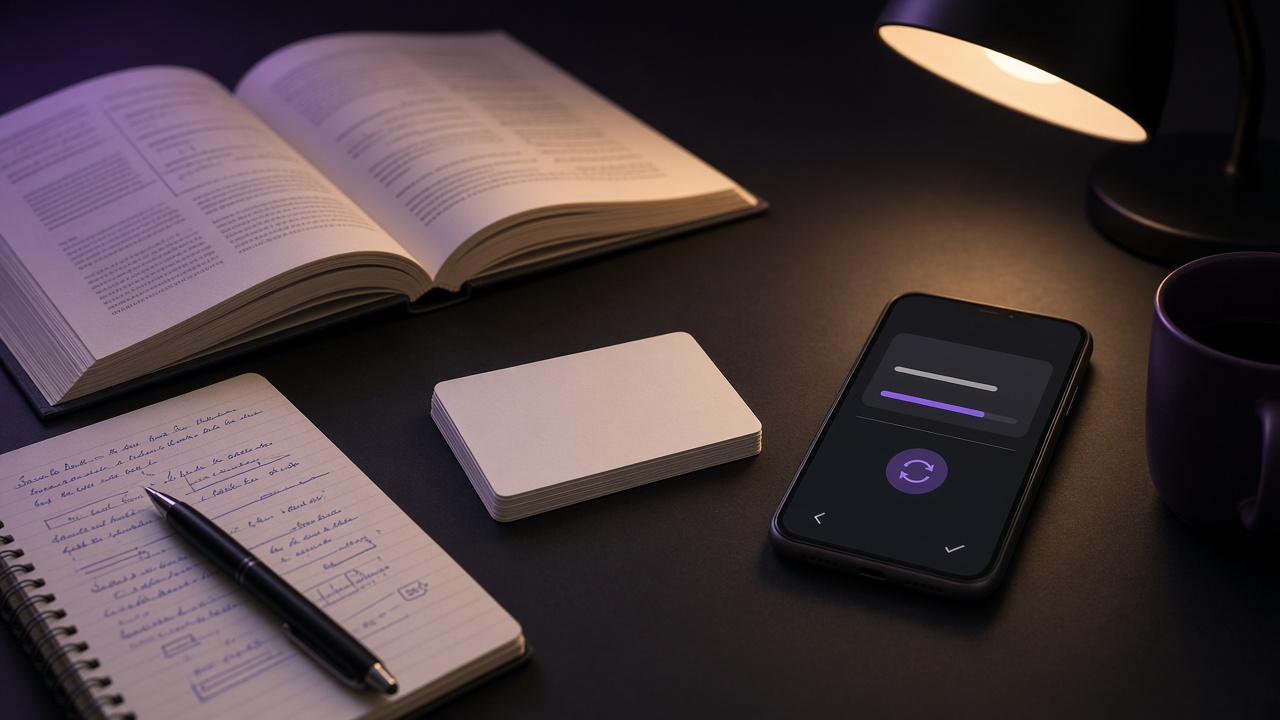
Most study sessions die in the same place. You have 14 pages of notes, a PDF from the lecturer, and three photos of a whiteboard. You know flashcards would help. You also know that typing 80 cards by hand will eat your evening.
So you reread the notes instead. It feels productive. It barely sticks.
One idea per card
A good flashcard asks one thing and expects one answer. Not a paragraph. Not "explain chapter 4".
- Front: What does the mitochondria do in a cell? Back: Produces ATP through cellular respiration.
- Front: When do you use the present perfect? Back: For a past action with a result in the present.
- Front: Name the three branches of government. Back: Legislative, executive, judicial.
If you need two sentences to answer, split the card. Short cards are easier to review on a bus. They also show you exactly what you do not know.
What is worth putting on a card
Not every line in your notes deserves a card. Start with things you must recall under pressure: definitions, formulas, dates, drug names, case names, verb forms, steps in a process.
Skip long opinions, full essay outlines, and anything you can look up in two seconds during an open-book task. Cards are for retrieval, not for storing a second copy of the textbook.
Use the source you already have
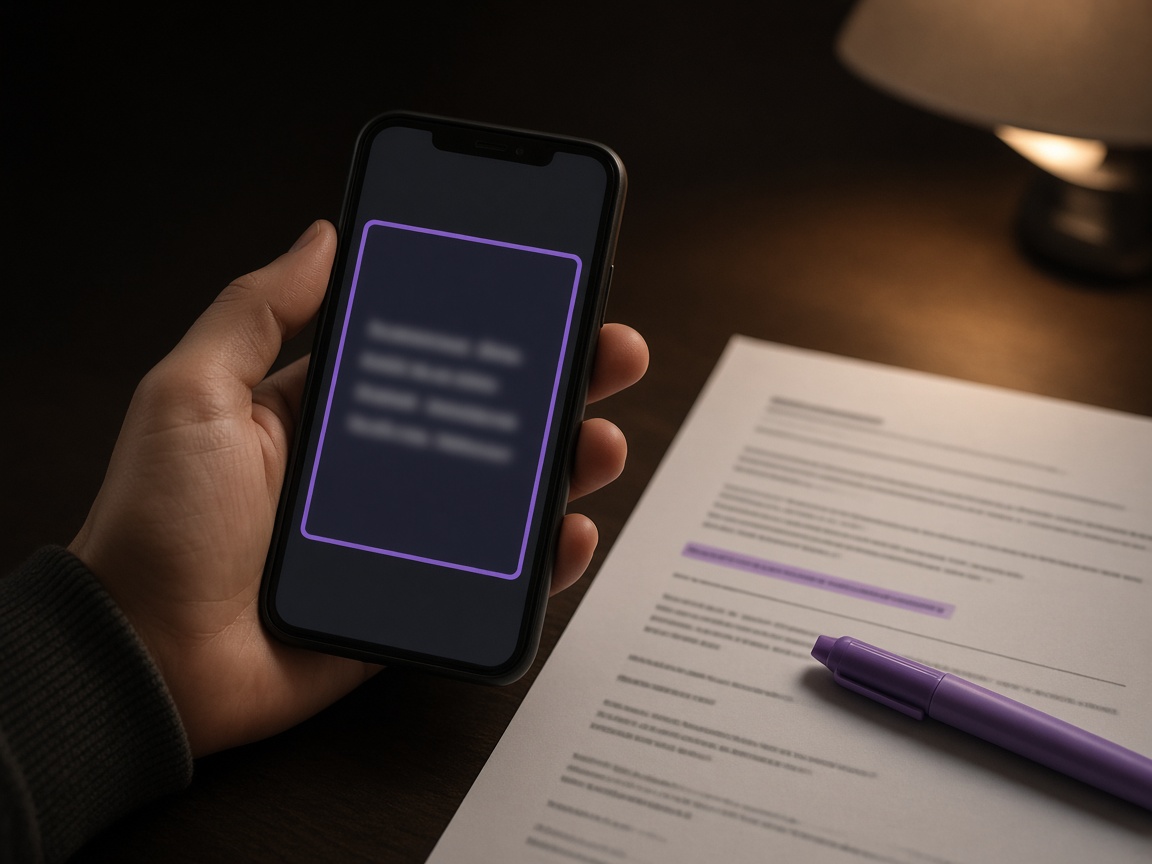
You do not need a clean typed document. A photo of the slide, a screenshot of a PDF, or a pasted chunk of text is enough if the content is readable.
In Quiz Genius you upload that material and the app builds a study set: flashcards, a quiz, and notes you can skim later. You still decide what to keep. Delete weak cards. Rewrite a prompt if it is too vague. The win is that you start from a full set, not from a blank screen.
A 15-minute loop that works
- Pick one lecture or one chapter. Not the whole course.
- Upload the notes or take photos of the pages you care about.
- Generate the set, then spend 5 minutes cutting junk cards.
- Do one pass of flashcards the same day, while the topic is still warm.
That last pass matters. Making the cards is not studying. Answering them is.
Common mistakes
- Cards that quote a full slide. You will recognize the block of text and think you know it.
- Answers that are longer than the question. Flip the card in your head: can you say it out loud?
- Building 300 cards on Sunday and never opening the deck again.
If you want to try this on real notes tonight, download Quiz Genius on the App Store or Google Play and make one set from a single class. One set beats a perfect system you never start.
More from the blog
10 Sep 2026 · 6 min read
Spaced repetition: why you forget by Wednesday
You knew it on Sunday. By Wednesday it is gone. Here is why, and a review loop that is small enough to keep.
Read article
10 Sep 2026 · 6 min read
Stop rereading. Practice like it is the real exam
Rereading feels safe. A timer does not. If the test is timed and closed-book, your practice should look the same.
Read article


